★★★★★★★
아이디어링 : First Mover. 퍼스트무버의 시대. 원격근무시대. 아이디어 회의 방법론 1편
https://kmong.com/gig/317273
원격근무시대. 아이디어 회의 방법론 1 드립니다. - 크몽
기타 | 신규 서비스 | 20,000원부터 | 1일 이내 완료 | 10분 내 응답
kmong.com
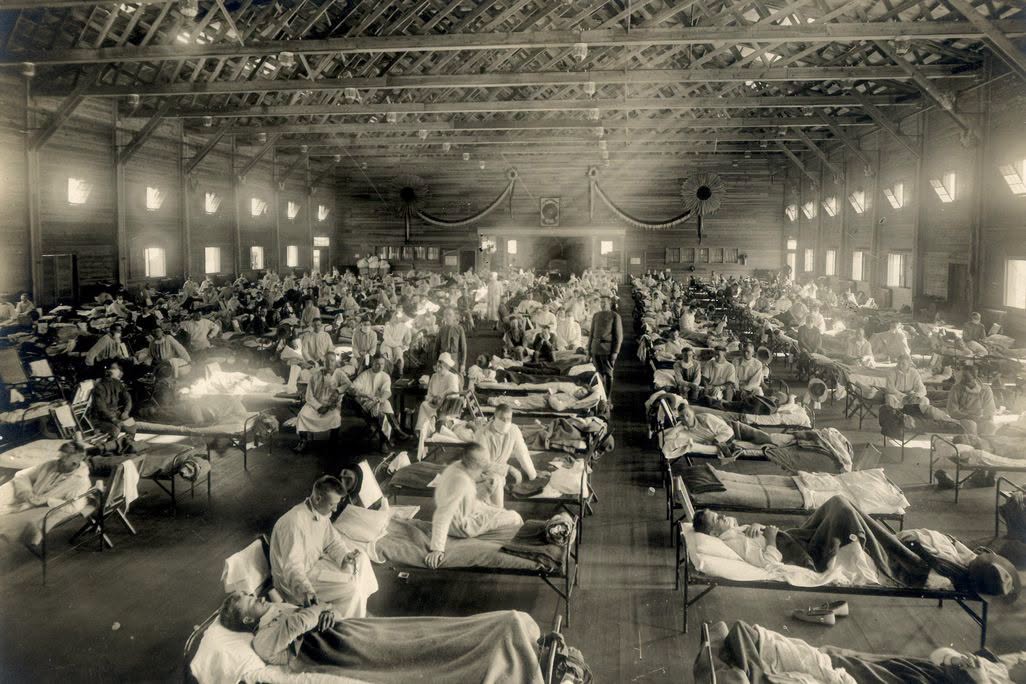
According to records, the United States was the first place this disease broke out. In March 1918, at an army camp in Kansas, USA.
The lungs of soldiers infected by the virus filled with fluid. Spots starting on the cheekbones covered the entire body within hours. People called this disease the "Purple Death."
Nurses examined the feet of the patients brought in first. Those whose feet had already turned black were moved immediately to a ward to await death without any treatment.
Between 1918 and 1920, 500 million people—about one-third of the world's population—were infected, and at least 50 million died. Over 670,000 people died in the United States alone. This number is greater than the combined total of Americans who died in World War I, World War II, the Korean War, and the Vietnam War.
However, Britain, France, and the United States, which were at war, strictly censored the press to prevent news of the disease from leaking out. The only country where the disease made headlines was Spain, which was not a warring nation. That is why the disease was named the Spanish Flu. Someone said. "The reason this disease became the Spanish flu is that the Spanish press did its job."
In Philadelphia, USA, over 500 bodies flooded into a municipal morgue designed to accommodate only 36. With a shortage of coffins, a streetcar factory churned out crude wooden boxes, and the coffins that arrived with difficulty were transported under armed guard.
As unrecovered bodies were left in homes for days, authorities sent handcarts into the streets to shout, "Bring the dead out!" In just a few weeks, over 13,000 people were buried in Philadelphia alone, and over 33,000 in New York.
Fear filled the jobs instead of people. At the LH Shatterk shipyard, only 54% of workers reported to work, and at the Groton ironworks, only 41% did. The streets were also deserted by fear.
Vienna's Golden Age of 1918 also faded due to the Spanish flu. Gustav Klimt collapsed, and in the autumn, his student Egon Schiele passed away at the age of 28. Three days before Schiele, his wife, who was six months pregnant, passed away. Thus, Schiele's painting *The Family* (Die familie), located in the Belvedere Palace in Vienna, remained forever unfinished.
Guillaume Apollinaire and Max Weber also died from this disease. Even the fathers of U.S. presidents were no exception to it.
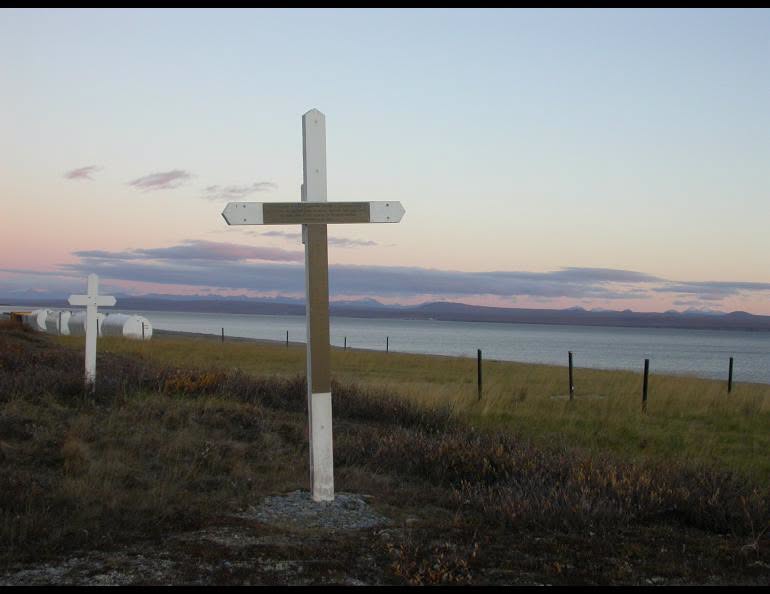
The disaster spread as far as the small village of Birebigh Mission in Alaska. In November 1918, 85% of the villagers died from the disease in just five days. The residents buried the bodies en masse beneath the frozen ground.
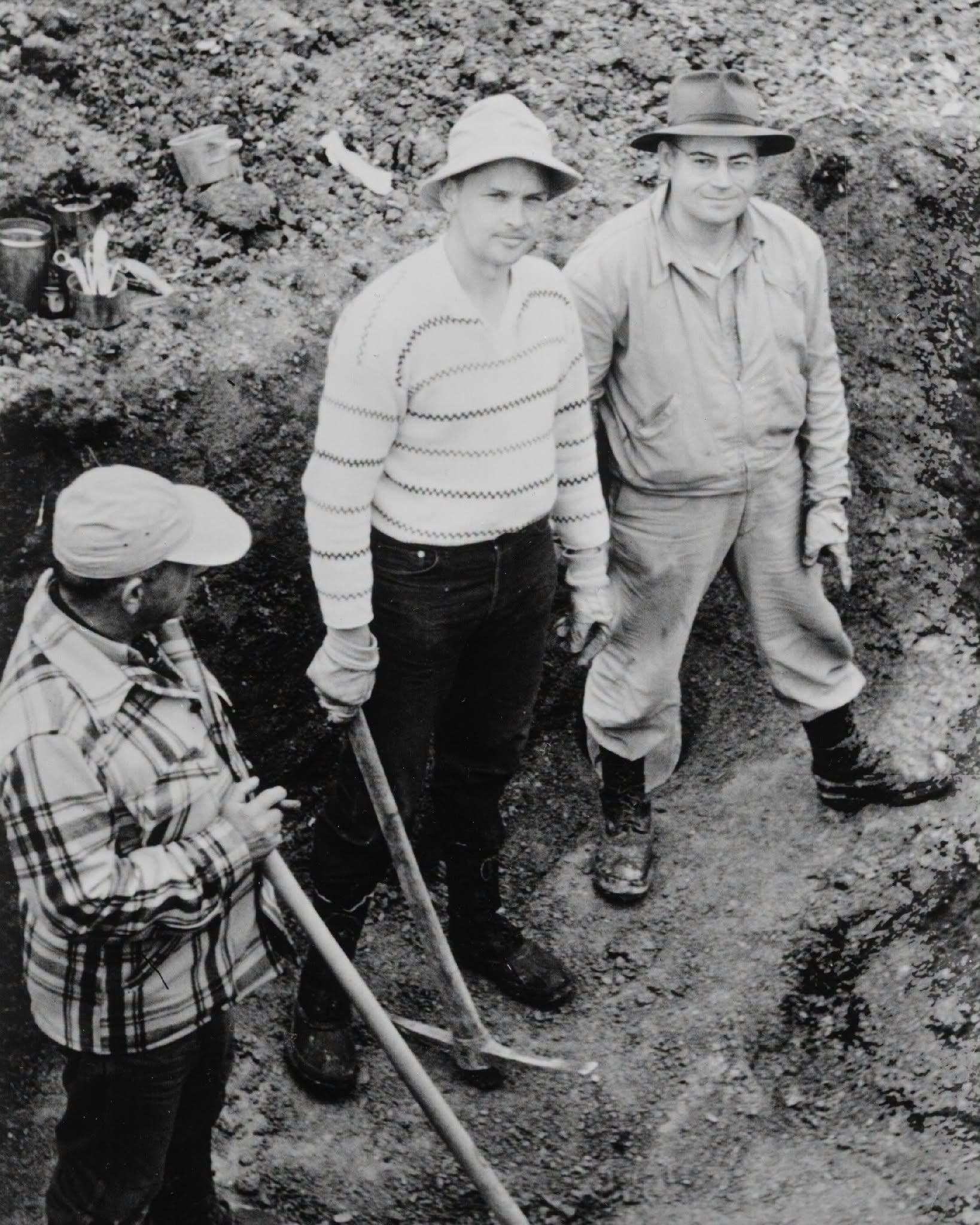
In 1951, Johan Hultin, a 25-year-old medical student, visited the graves with the dream of reviving the frozen virus. However, it was impossible with the technology of the time.
Forty-six years later, in 1997, 72-year-old Hultin read a research paper. It stated that a team led by molecular pathologist Jeffrey Taubenberger had found viral genes in the tissue of a soldier who had died in 1918. The old man wrote a letter to a scholar, persuading him to revive the lung tissue from the grave.
Hultin took $3,200 from his savings, packed his wife's garden shears, and left for Alaska. With the help of four locals, he found the body of an Inuit woman two meters underground. Her lungs had been preserved almost perfectly for 80 years.
Tovenberger's team decoded the viral genome from her lungs and succeeded in reconstructing the virus in 2005. It was the first instance of an extinct pathogen being artificially revived. The virus turned out to be avian influenza.
The fully reconstructed 1918 virus possessed an exceptional ability to replicate rapidly. On the fourth day of infection, the amount of 1918 virus found in the lung tissue of a mouse was 39,000 times greater than the amount produced by a single recombinant influenza virus used as a comparison.
According to Torvenberger's research, that virus was the "mother of all pandemics." The influenza of 1957, the influenza of 1968, the 2009 H1N1 flu, and even the virus responsible for the flu vaccine we receive every year were all descendants of the Spanish flu virus.
Virologists described Taubenberger's research as the greatest achievement in years and a discovery that would save countless lives.

ILOVEBUSINESS. 아이러브비즈니스. You can find KOREA company, factory, business...and possibilities
http://ilovebusiness.co.kr
'공부하기 > 경영학과 군사학' 카테고리의 다른 글
| 왜 외국인 노동자들이 USDT를 원할까? (0) | 2026.06.21 |
|---|---|
| 오마카세 몰락과 불황기 가성비 뷔페의 폭주 (0) | 2026.06.17 |
| 주가는 오르는데, 원화는 왜 추락하나? (0) | 2026.06.17 |
| 2030년까지 봉인된 코스피 급등락의 비밀 (박종훈의 지식한방) (0) | 2026.06.10 |
| 매일유업 고(故) 김복용 회장의 감동적인 일화 (0) | 2026.06.04 |


댓글