지구 공기 터널 시스템(Earth-to-Air Heat Exchanger, EAHE) 또는 지중 열교환기
by 리치캣2025. 7. 22.
반응형
에어터널 중간에...필터를 장착해서...
공기를 정화하는 과정을 1-2개 거치게 하는 방법도 좋을 것 같다.
==============================================
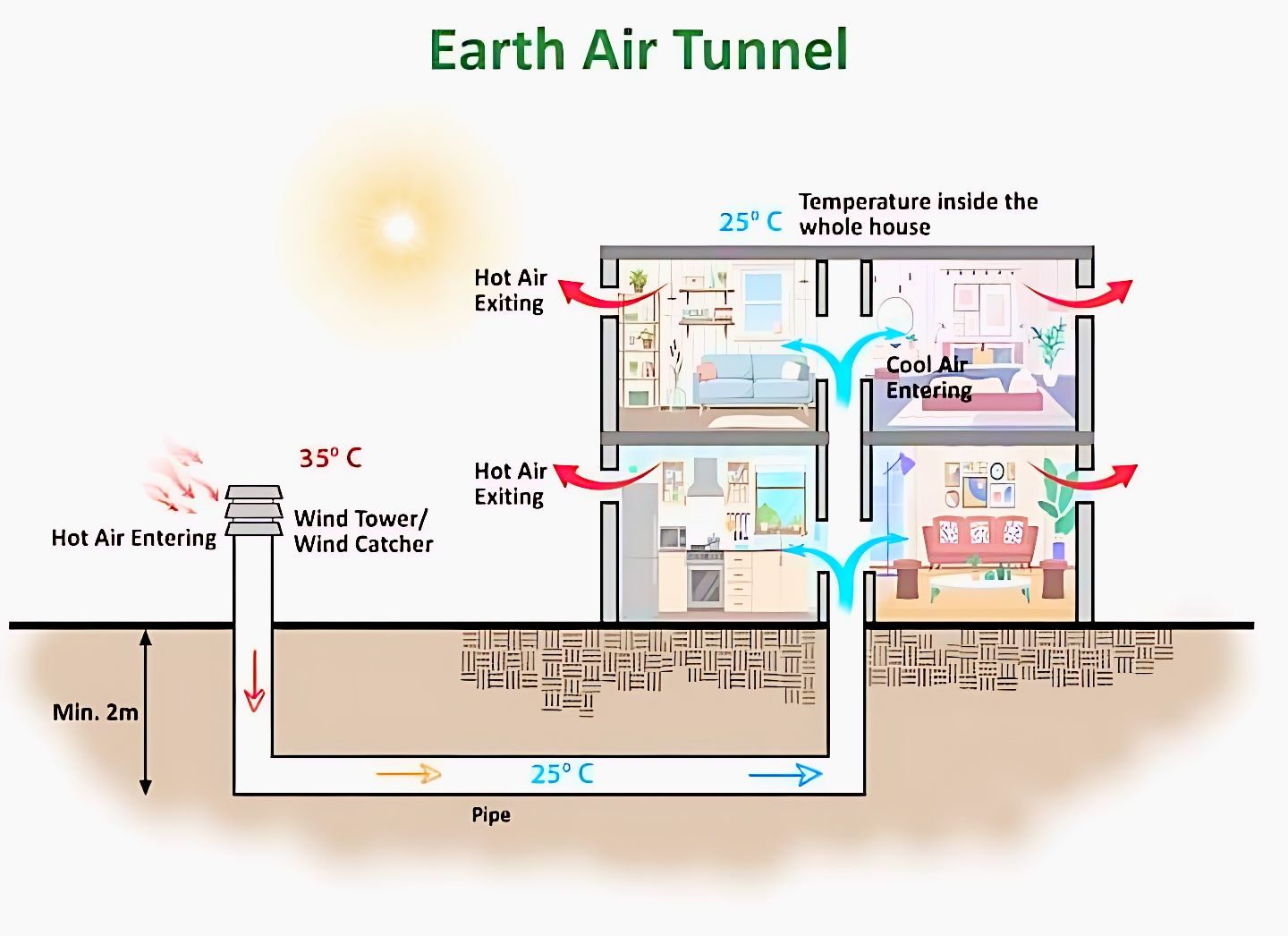
이 이미지는 건물의 수동 냉난방에 사용되는 지구 공기 터널 시스템(Earth-to-Air Heat Exchanger, EAHE) 또는 지중 열교환기라고도 함)의 개념과 작동 방식을 보여주는 다이어그램입니다. 다음은 다이어그램의 자세한 구성입니다.
구성 요소 및 기능: 1. 윈드 타워/윈드 캐처: 건물 외부에 위치한 이 구조물(왼쪽)은 우세풍을 포집하여 시스템으로 공기를 유입하도록 설계되었습니다. 더운 날씨에는 35°C의 더운 공기를 유입합니다. 2. 지구 공기 터널(파이프): 최소 2m(2미터) 깊이의 지하에 매설된 긴 파이프입니다. * 온도 안정화: 핵심 원리는 특정 깊이(일반적으로 1.5~2미터 미만)의 지구 온도가 연중 비교적 안정적으로 유지되며, 일반적으로 해당 지역의 연평균 대기 온도와 유사하다는 것입니다. * 열 교환: 외부의 뜨거운 공기가 이 매설된 파이프를 통과하면서 주변의 차가운 지구와 열을 교환합니다. 이 그림은 파이프 내부의 기온이 25°C로 안정되는 것을 보여줍니다. 3. 차가운 공기 유입(집으로): 지하 공기 터널을 통과한 후, 25°C로 냉각된 공기는 바닥에서 건물로 유입됩니다. 4. 건물 구조(2층 주택): 이 그림은 여러 방(거실, 주방, 침실 등)이 있는 2층 주택을 보여줍니다. 5. 차가운 공기 분배: 아래에서 유입된 차가운 공기는 대류 현상으로 인해 자연스럽게 집 안으로 상승합니다(차가운 공기는 밀도가 높기 때문입니다). 파란색 화살표는 차가운 공기가 집의 여러 부분으로 유입되는 흐름을 나타냅니다. 6. 뜨거운 공기 배출: 차가운 공기가 순환하면서 거주자, 가전제품 및 외부 열원에서 열을 흡수하면서 따뜻해집니다. 더 따뜻하고 밀도가 낮은 공기는 상승하여 집 위쪽에서 배출되는데, 이는 "뜨거운 공기 배출"이라고 표시된 빨간색 화살표로 표시됩니다. 이는 자연 환기 스택 효과를 만들어 아래에서 더 많은 차가운 공기를 끌어들입니다. 7. 집 전체 내부 온도: 이 그림은 집 전체 내부의 적정 온도를 25°C로 나타내며, 이는 외부 온도가 상당히 높을 때(35°C)에도 이 시스템이 쾌적한 실내 기후를 유지하는 데 효과적임을 보여줍니다. 8. 태양: 태양이 밝게 비추고 있는데, 이는 주변 온도가 더울 때를 나타내며, 이러한 시스템은 냉방에 가장 효과적입니다. 작동 원리(여름철 수동 냉방): 더운 여름철: * 더운 외부 공기(예: 35°C)가 풍력 타워/윈드 캐처로 유입됩니다. * 그런 다음 매설된 파이프(지중 공기 터널)를 통해 흐릅니다. * 2미터 이상 깊이의 지하는 주변 공기(예: 25°C)보다 차갑습니다. * 열은 뜨거운 공기에서 차가운 땅으로 전달되어 파이프 내부의 공기가 식습니다. * 이렇게 식은 공기(25°C)는 집 안으로 들어옵니다. * 차가운 공기가 들어와 상승하면서 집 안의 따뜻한 공기를 밀어내고, 이 공기는 높은 곳의 개구부를 통해 빠져나가 지속적인 자연 기류를 형성하여 기계적인 에어컨 없이도 쾌적한 실내 온도를 유지합니다. 땅속 공기 터널의 장점: * 에너지 효율: 기존 에어컨의 필요성을 크게 줄이거나 없앰으로써 에너지 소비와 공과금을 절감합니다. * 환경 친화성: 재생 가능 자원(지열 에너지)을 사용하며 직접적인 배출물이 없습니다. * 수동형 시스템: 기계적 부품을 최소화하거나 전혀 사용하지 않고 자연 원리(대류, 지면 온도 안정)에 의존합니다(일부 설계에서는 팬을 보조 공기 흐름에 사용할 수 있지만, 핵심 원리는 수동형입니다). * 실내 공기 질 향상: 신선한 외부 공기를 유입할 수 있습니다. 이 다이어그램은 건물의 기후 제어를 위한 지속 가능하고 오래된 기술을 현대적 이해를 바탕으로 효과적으로 시각화한 것입니다.
This image is a diagram illustrating the concept and operation of an Earth Air Tunnel system, also known as an Earth-to-Air Heat Exchanger (EAHE) or Ground-Coupled Heat Exchanger, used for passive cooling and heating of a building.
Here's a detailed breakdown of the diagram:
Components and Their Functions:
1. Wind Tower/Wind Catcher: Located outside the building, this structure (at the left) is designed to capture prevailing winds and direct air into the system. In hot conditions, it brings in Hot Air Entering at 35°C.
2. Earth Air Tunnel (Pipe): This is a long pipe buried underground at a depth of at least Min. 2m (2 meters).
* Temperature Stabilization: The key principle here is that the earth's temperature at a certain depth (usually below 1.5-2 meters) remains relatively stable throughout the year, typically around the annual average ambient air temperature of the region.
* Heat Exchange: As the hot air from the outside travels through this buried pipe, it exchanges heat with the cooler surrounding earth. The diagram shows the air temperature inside the pipe stabilizing to 25°C.
3. Cool Air Entering (into the house): After traveling through the earth air tunnel, the now cooled air at 25°C enters the building from the bottom.
4. Building Structure (Two-story house depicted): The diagram shows a two-story house with various rooms (living room, kitchen, bedroom, etc.).
5. Cool Air Distribution: The cool air, entering from below, naturally rises through the house (due to convection, as cool air is denser). The blue arrows indicate the flow of Cool Air Entering into different parts of the house.
6. Hot Air Exiting: As the cool air circulates and absorbs heat from the occupants, appliances, and external sources, it warms up. This warmer, less dense air then rises and is exhausted from the upper parts of the house, as indicated by the red arrows labeled Hot Air Exiting. This creates a natural ventilation stack effect, drawing in more cool air from below.
7. Temperature Inside the Whole House: The diagram states that the desired temperature inside the whole house is 25°C, illustrating the effectiveness of the system in maintaining a comfortable indoor climate even when the outside temperature is significantly higher (35°C).
8. Sun: The sun is shown shining, indicating hot ambient conditions, which is when such a system is most beneficial for cooling.
How it Works (Passive Cooling in Summer):
During hot summer days:
* Hot outside air (e.g., 35°C) is drawn into the wind tower/wind catcher.
* It then flows through the buried pipe (earth air tunnel).
* The earth, at a depth of 2 meters or more, is cooler than the ambient air (e.g., 25°C).
* Heat is transferred from the hot air to the cooler earth, causing the air inside the pipe to cool down.
* This cooled air (25°C) then enters the house.
* As the cool air enters and rises, it displaces the warmer air inside the house, which then exits through openings at higher levels, creating a continuous natural airflow and maintaining a comfortable indoor temperature without mechanical air conditioning.
Benefits of Earth Air Tunnels:
* Energy Efficiency: Significantly reduces or eliminates the need for conventional air conditioning, leading to lower energy consumption and utility bills.
* Environmental Friendliness: Uses a renewable resource (geothermal energy of the earth) and produces no direct emissions.
* Passive System: Relies on natural principles (convection, ground temperature stability) with minimal or no mechanical parts (fans might be used for assisted flow in some designs, but the core principle is passive).
* Improved Indoor Air Quality: Can bring in fresh outside air.
This diagram effectively visualizes a sustainable and ancient technique, updated with modern understanding, for climate control in buildings.


댓글