
생산성에서 이미 게임의 절반은 가지고 간 상황이라고 본다.
“9발에 59초” 한화 신형 차륜형자주포 K9MH 실사격 영상 유출 충격! 독일 RCH 155 넘어 미국시장 노린다 [Defense Express 번역] (936화)
https://www.youtube.com/watch?v=H-Q3WJAwlZY
한화의 신형 차륜형 자주포 K9MH의 핵심 경쟁력은 무엇인가? K9MH는 59초 동안 9발을 발사하는 압도적인 화력 밀도와 함께, 검증된 K9 플랫폼과 타트라 차체의 결합으로 대규모 양산 능력과 신속한 실전 배치 가능성을 갖춰 미국 시장에서 유리한 고지를 점하고 있습니다.
1. 한화 신형 자주포 K9MH, 미국 시장 공략 가속화
한화 에어로스페이스의 신형 차륜형 자주포 K9MH가 압도적인 화력과 검증된 플랫폼을 바탕으로 미국 시장 진출에 박차를 가하고 있다.
1.1. K9MH의 등장 배경과 핵심 경쟁력
-
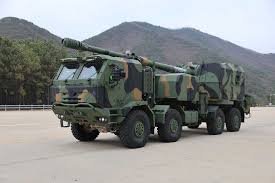
K9MH, K9 자주포 포탑을 이식한 차륜형 자주포
-
2025년 10월 아덱스 행사에서 처음 공개된 모형은 K9 자주포 포탑을 그대로 이식한 차륜형 자주포였다.
-
개발진은 이 신형 자주포의 성능에 대해 높은 자신감을 보였다.
-
2026년 3월 말, 'K9MH'라는 제식 명칭을 부여받고 실사격 테스트를 진행했다.
-
-
압도적인 화력 밀도와 신속한 실전 배치 가능성
-
유출된 영상에서 K9MH는 59초 동안 9발을 발사하는 놀라운 연사 속도를 기록했다.
-
이는 사격 주기 7.5초, 5초를 달성하며 스웨덴의 차륜형 자주포 '아처'와 대등한 수준의 고속 사격 능력을 보여준다.
-
재장전 속도 측면에서는 독일의 'RCH15'를 능가할 가능성도 제기된다.
-
K9MH는 고강도 화력 임무 수행을 위해 설계된 발사율 포병 체계로 분류된다.
-
-
독일 RCH15와의 경쟁에서 반격에 나서다
-
영국 육군 기동 화력 체계 사업에서 K9 자주포가 독일 RCH15에게 패배한 경험이 있다.
-
이에 한화는 8륜형 차체에 K9 자주포 포탑을 결합한 K9MH를 개발하며 반격에 나섰다.
-
1.2. K9MH의 기술적 특징과 경쟁 모델 비교
-
검증된 K9 플랫폼과 타트라 차체의 결합
-
K9MH는 세계적으로 널리 운용되는 K9 플랫폼을 기반으로 한다.
-
서방 국가들이 요구하는 고기동성과 신속한 전개 능력을 충족시키기 위해 차륜형으로 개조되었다.
-
체코의 타트라(Tatra) 사와 협력하여 개발한 차체를 바탕으로 뛰어난 기동성을 선보였다.
-
타트라 차체 선택 이유는 글로벌 수출 시장 요구 사항 충족, 험지 주파 성능 확보, 나토(NATO) 운용 및 정비 인프라 활용 용이성 때문이다.
-
이는 미국이 선호하거나 신뢰하는 플랫폼에 K9 포탑을 결합시켜 선정 가능성을 높이려는 전략이다.
-
K9MH는 대규모 양산 능력과 빠른 실전 배치 가능성을 갖췄다.
-
-
자동 장전 시스템과 고속 사격 능력
-
K9MH는 포탄과 장약을 별도 컨베이어로 이송하는 이중 컨베이어 방식의 자동 장전 시스템을 채택했다.
-
포탄은 수직 적재 후 순간적으로 수평 상태로 전환되어 지속적인 고속 사격을 가능하게 한다.
-
실제 시험에서 초기 장전 시간을 제외하고 단 59초 만에 아홉 발을 발사했다.
-
이는 스웨덴의 '아처'와 대등한 자동화 수준을 보여준다.
-
-
경쟁 모델과의 비교: 아처와 RCH15
-
기동성 및 생존성 측면:
-
K9MH는 정지 후 발사까지 23초, 사격 후 진지 이탈까지 50초가 소요된다.
-
반면 아처는 정지 후 발사까지 34초, 진지 이탈까지 34초가 소요되어 더 빠르다.
-
RCH15는 주행 중 사격이 가능하여 정지 및 발열 과정이 생략되므로 진지 이탈 시간이 0초이다.
-
이로 인해 생존성 항목에서는 RCH15가 가장 높은 점수를, 아처가 그다음, K9MH가 가장 낮은 점수를 받는다.
-
-
자동화 측면:
-
K9MH와 아처의 자동화 수준은 거의 비슷하며, 각각 2-3명, 3명의 운용 인원이 필요하다.
-
RCH15는 완전 무인화된 포탑을 갖추고 승무원 두 명만으로 운용 가능하며, 현존 자주포 중 가장 진보된 체계로 평가받는다.
-
-
1.3. 미국 차세대 자주포 사업에서의 K9MH의 강점
-
미국 시장 진출 가속화 및 현지 생산 전략
-
한화 에어로스페이스는 K9MH를 앞세워 미국군 차세대 자주포 사업에서 유리한 고지를 선점하려 한다.
-
2026년 3월 말, K9MH의 시험용 이로기(IROGI)를 인도할 계획임을 확인했다.
-
미국 앨라배마주에 현지 생산 시설을 건립하겠다는 의사를 밝히며 미국 방산 시장 입지를 공고히 하려는 전략이다.
-
성능 시연 영상을 공개하며 기대감을 높였다.
-
-
신속한 전력화와 대규모 양산 능력
-
미국군은 기술적 난항으로 실패한 자체 개발 자주포 사업 경험 때문에 이미 검증된 시스템을 선호한다.
-
즉, 대규모 양산 경험이 있고 실전 배치가 가능한 모델을 선호한다.
-
K9MH는 2,000문 이상의 누적 생산량을 기록한 K9 A2 포탑과 검증된 타트라 차체를 결합하여 대규모 양산 능력과 빠른 실전 배치 가능성을 충족시킨다.
-
반면 아처는 약 70여 문, RCH15는 약 50여 문 정도의 누적 생산량을 기록하고 있다.
-
K9 계열의 누적 생산량은 최소 3,200문에서 최대 3,500문 수준으로 예상된다.
-
규모의 경제와 신뢰성 측면에서 K9MH를 따라올 자주포는 없다.
-
-
뛰어난 가성비
-
독일 RCH15는 가장 진보된 하이엔드급 자주포이지만 가격이 비싸다.
-
RCH15의 예상 도입 가격은 200억 원 내외, 아처는 130억 원 내외, K9MH는 100억 원 내외로 추정된다.
-
K9MH의 가격은 RCH15의 절반 수준이지만, 성능은 RCH15의 70~80%에 해당한다.
-
이는 FA-50이 최신형 F-16의 절반 가격으로 70~80% 성능을 보여주는 것과 유사하다.
-
2. K9MH의 미래 전망과 시사점
K9MH는 화력, 자동화, 기동성 간의 우수한 균형과 뛰어난 가성비를 바탕으로 차세대 차륜형 자주포 시장의 강력한 경쟁자로 부상하고 있다.
2.1. 현대 포병 설계의 핵심 과제와 K9MH의 균형
-
발사 속도, 생존성, 전술적 유연성 간의 상충 관계
-
K9MH가 아처보다 다소 긴 진지 이탈 시간을 보이는 것은 현대 포병 설계의 핵심 과제 간 상충 관계를 보여준다.
-
-
미 육군의 차세대 자주포 사업 선정 요소
-
미국 육군은 생존성, 자동화, 신속한 전력화를 가장 중요하게 요구한다.
-
특히 포병 전력의 생존성은 '슛 앤 스쿠(Shoot and Scoot)' 능력, 즉 사격 후 적의 반격 포탄이 날아오기 전에 신속하게 이탈하는 능력에 달려있다.
-
-
K9MH의 경쟁력과 시장 전망
-
최고의 가성비와 압도적인 화력 밀도를 원하는 국가에는 K9MH가 최적의 선택이 될 것이다.
-
가격과 상관없이 우수한 생존성을 원하는 국가에는 기동 중 사격이 가능한 RCH15가 최적의 선택이 될 것이다.
-

I believe we have already won half the game in terms of productivity.
“9 Rounds in 59 Seconds” Shocking Leak of Live-Fire Video of Hanwha’s New Wheeled Self-Propelled Howitzer K9MH! Surpassing Germany’s RCH 155 to Target the US Market [Defense Express Translation] (Episode 936)
https://www.youtube.com/watch?v=H-Q3WJAwlZY
What is the core competitive edge of Hanwha’s new wheeled self-propelled howitzer, the K9MH? With an overwhelming firepower density capable of firing 9 rounds in 59 seconds, the K9MH holds a favorable position in the US market by combining the proven K9 platform with the Tatra chassis, enabling large-scale mass production capabilities and the possibility of rapid operational deployment.
Table of Contents
1. Hanwha’s New Self-Propelled Howitzer K9MH Accelerates Penetration of the US Market
1.1. Background of the K9MH’s Emergence and Core Competitive Edge
1.2. Technical Features of the K9MH and Comparison with Competitor Models
1.3. Strengths of the K9MH in the US Next-Generation Self-Propelled Howitzer Project
2. Future Prospects and Implications of the K9MH
2.1. The Balance Between Key Challenges of Modern Artillery Design and the K9MH
1. Hanwha’s New Self-Propelled Howitzer K9MH Accelerates Penetration of the US Market
Hanwha Aerospace’s new wheeled self-propelled howitzer, the K9MH, is accelerating its entry into the US market based on its overwhelming firepower and proven platform.
1.1. Background of the K9MH’s Emergence and Core Competitiveness
The K9MH: A Wheeled Self-Propelled Howitzer with a Transplanted K9 Turret
The model, first unveiled at the ADEX event in October 2025, was a wheeled self-propelled howitzer with the K9 turret transplanted directly.
The development team expressed high confidence in the performance of this new howitzer.
In late March 2026, it was assigned the official designation 'K9MH' and conducted live-fire tests.
Overwhelming Firepower Density and Potential for Rapid Deployment
In leaked footage, the K9MH recorded an astonishing rate of fire, firing 9 rounds in 59 seconds.
Achieving firing cycles of 7.5 and 5 seconds, it demonstrates high-speed firing capabilities comparable to Sweden's wheeled self-propelled howitzer, the 'Archer'.
In terms of reload speed, there is also a possibility that it surpasses Germany's 'RCH-15'.
The K9MH is classified as a rate-of-fire artillery system designed for performing high-intensity firepower missions.
Rising in Counterattack Against the German RCH-15
The K9 self-propelled howitzer has previously lost to the German RCH-15 in the British Army's Mobile Firepower System project.
In response, Hanwha has launched a counterattack by developing the K9MH, which combines the K9 self-propelled howitzer turret with an 8-wheeled chassis.
1.2. Technical Features of the K9MH and Comparison with Competitor Models
**Combination of the Proven K9 Platform and Tatra Chassis**
The K9MH is based on the globally operated K9 platform.
It has been modified into a wheeled vehicle to meet the high mobility and rapid deployment capabilities required by Western nations.
It demonstrates outstanding mobility based on a chassis developed in collaboration with the Czech company Tatra.
The reasons for selecting the Tatra chassis include meeting global export market requirements, securing off-road capability, and facilitating the use of NATO operational and maintenance infrastructure.
This is a strategy to increase the likelihood of selection by combining the K9 turret with a platform preferred or trusted by the United States.
The K9MH possesses the capability for large-scale mass production and rapid operational deployment.
**Automatic Loading System and High-Speed Firing Capability**
The K9MH adopts an automatic loading system using a dual-conveyor method that transports shells and propellant charges via separate conveyors.
After vertical loading, the shells instantaneously switch to a horizontal state, enabling continuous high-speed firing. In actual testing, it fired nine rounds in just 59 seconds, excluding the initial loading time.
This demonstrates a level of automation comparable to Sweden's 'Archer'.
Comparison with Competitor Models: Archer and RCH15
Mobility and Survivability:
The K9MH takes 23 seconds from stopping to firing and 50 seconds to withdraw from the position after firing.
In contrast, the Archer is faster, taking 34 seconds from stopping to firing and 34 seconds to withdraw from the position.
The RCH15 is capable of firing while moving, eliminating the stopping and heating processes, resulting in a withdrawal time of 0 seconds.
Consequently, in the survivability category, the RCH15 receives the highest score, followed by the Archer, and the K9MH receives the lowest.
Automation:
The automation levels of the K9MH and Archer are nearly identical, requiring 2-3 and 3 operators, respectively. The RCH-15 features a fully unmanned turret and can be operated by only two crew members; it is considered the most advanced system among existing self-propelled howitzers.
1.3. Strengths of the K9MH in the US Next-Generation Self-Propelled Howitzer Project
Accelerated Entry into the US Market and Local Production Strategy
Hanwha Aerospace aims to secure a favorable position in the US military's next-generation self-propelled howitzer project by leveraging the K9MH.
It has confirmed plans to deliver the K9MH test IROGI in late March 2026.
This is a strategy to solidify its position in the US defense market by expressing its intention to establish a local production facility in Alabama.
It has raised expectations by releasing performance demonstration videos.
Rapid Deployment and Mass Production Capabilities
Due to past experiences with domestically developed self-propelled howitzer projects that failed due to technical difficulties, the US military prefers already proven systems.
In other words, they prefer models that have experience in large-scale mass production and are capable of actual deployment. The K9MH combines the K9 A2 turret, which has recorded a cumulative production of over 2,000 units, with the proven Tatra chassis, satisfying the requirements for large-scale mass production capabilities and rapid combat deployment.
In contrast, the Archer has recorded a cumulative production of approximately 70 units, and the RCH-15 about 50 units.
The cumulative production of the K9 series is expected to range from a minimum of 3,200 units to a maximum of 3,500 units.
In terms of economies of scale and reliability, no self-propelled howitzer can match the K9MH.
**Outstanding Cost-Effectiveness**
The German RCH-15 is the most advanced high-end self-propelled howitzer, but it is expensive.
The estimated acquisition price for the RCH-15 is around 20 billion KRW, the Archer around 13 billion KRW, and the K9MH around 10 billion KRW.
While the price of the K9MH is about half that of the RCH-15, its performance corresponds to 70–80% of the RCH-15's. This is similar to how the FA-50 demonstrates 70–80% of the performance of the latest F-16 at half the price.
2. Future Prospects and Implications of the K9MH
Based on an excellent balance of firepower, automation, and mobility, as well as outstanding cost-effectiveness, the K9MH is emerging as a strong competitor in the next-generation wheeled self-propelled howitzer market.
2.1. The Balance Between Key Challenges of Modern Artillery Design and the K9MH
The Trade-off Between Rate of Fire, Survivability, and Tactical Flexibility
The fact that the K9MH exhibits a slightly longer withdrawal time from position than the Archer demonstrates the trade-offs between the key challenges of modern artillery design.
Selection Criteria for the U.S. Army's Next-Generation Self-Propelled Howitzer Program
The U.S. Army prioritizes survivability, automation, and rapid deployment.
In particular, the survivability of artillery forces depends on "Shoot and Scoot" capability—that is, the ability to withdraw quickly after firing before enemy counter-fire shells arrive.
Competitiveness and Market Outlook of the K9MH
The K9MH will be the optimal choice for nations seeking the best cost-effectiveness and overwhelming firepower density.
For nations desiring superior survivability regardless of price, the RCH15, capable of firing while on the move, will be the optimal choice.

'공부하기 > military. warfare.' 카테고리의 다른 글
| 포병으로부터 살아남는 법 (0) | 2026.05.07 |
|---|---|
| "벌써 500대? 짝퉁이라 비웃던 J-20의 반격", F-22 랩터가 긴장하는 진짜 이유! (0) | 2026.05.07 |
| 무너져버린 하늘의 요새 - 라인배커2 작전 (Operation Linebacker II) (0) | 2026.04.09 |
| 'UI가 보이는 보통 모드'와 'UI가 보이지 않는 모드(Ctrl+U로 활성화)'의 구성 요소와 그 차이 (0) | 2026.04.08 |
| 작정하고 만든 3세대 전차 M1E3 에이브람스 ??? (0) | 2026.04.05 |


댓글