해안 절벽에 마치 바다 위에 아슬아슬하게 자리 잡은 듯한 인상적인 고층 컨테이너 하우스는 탁 트인 전망을 극대화하고 험준한 지형과 조화를 이루는 혁신적인 모듈식 디자인을 보여줍니다. 이러한 스타일의 주택은 일반적으로 40피트(약 12미터) 컨테이너 4개 이상을 십자형이나 별 모양으로 배치하고, 견고한 지지대 위에 캔틸레버 방식으로 돌출시켜 넓은 생활 공간과 드라마틱한 건축미를 구현합니다.
건축 과정은 세심한 계획 수립과 인허가 절차에서 시작됩니다. 컨테이너 건축에 정통한 건축가와 구조 엔지니어를 고용하여 레이아웃을 설계하고, 지진 및 풍하중에 필수적인 내진 설계를 확보하며, 환경 및 해안 영향 평가를 포함한 관련 당국의 승인을 받아야 합니다.
다음으로 부지 정비 작업이 진행됩니다. 진입로를 확보하고, 옹벽이나 평탄 작업을 통해 경사면을 안정화한 후, 견고한 고가 기초를 설치합니다. 일반적으로 홍수 방지, 조망 확보, 그리고 하부 통풍을 위해 깊은 콘크리트 교각, 철골 말뚝 또는 고가 플랫폼을 사용하여 구조물을 지면보다 높이 들어 올립니다.
컨테이너는 트럭이나 바지선으로 운반되어 대형 크레인을 사용하여 제 위치에 설치됩니다. 작업자들은 컨테이너를 기초와 서로 단단히 용접하거나 볼트로 고정합니다. 특히, 지면에 직접 지지되지 않고 돌출된 부분에는 무거운 강철 빔과 보강재를 추가하여 캔틸레버 구조를 만듭니다. 파노라마 창, 슬라이딩 도어, 그리고 내부 연결 통로를 위해 큰 개구부를 만들고, 프레임을 용접하여 강도를 유지합니다.
단열재는 습도와 온도 변화에 대응하기 위해 스프레이 폼이나 견고한 패널을 내부에 시공합니다. 배관, 전기, 태양광 패널(대부분 지붕 설치), 냉난방 시스템(HVAC)을 설치하고, 각종 설비는 신중하게 배치합니다. 목재 사이딩이나 내구성이 뛰어난 금속과 같은 외장재는 방수 및 미관을 향상시키고, 데크, 난간, 통로는 야외 생활 공간을 더욱 풍요롭게 합니다.
내부 마감재(바닥재, 석고보드, 주방, 욕실)는 쾌적한 공간을 만들어줍니다. 일반적으로 시공 기간은 6~12개월이며, 외딴 지역의 물류, 날씨, 맞춤형 설계 등에 따라 변동될 수 있습니다.
2025~2026년 기준, 여러 개의 컨테이너를 사용하여 높이 띄운 캔틸레버형 주택(약 1,200~2,000평방피트)의 예상 건축비는 20만 달러에서 50만 달러 이상입니다. 이 비용에는 컨테이너(총 2만~6만 달러), 고도 및 부지 조건으로 인한 고급 기초 및 지지대 설치(5만~15만 달러 이상), 구조 변경 및 보강(8만~20만 달러), 공과금, 마감재, 태양광 발전 시스템 설치 비용이 포함됩니다.
하와이의 높은 자재 운송비, 인건비, 인건비로 인해 가격이 상한선에 가깝지만, 모듈식 건축의 효율성과 재활용 자재 사용으로 기존 해안 건축 방식보다 비용을 절감할 수 있습니다.
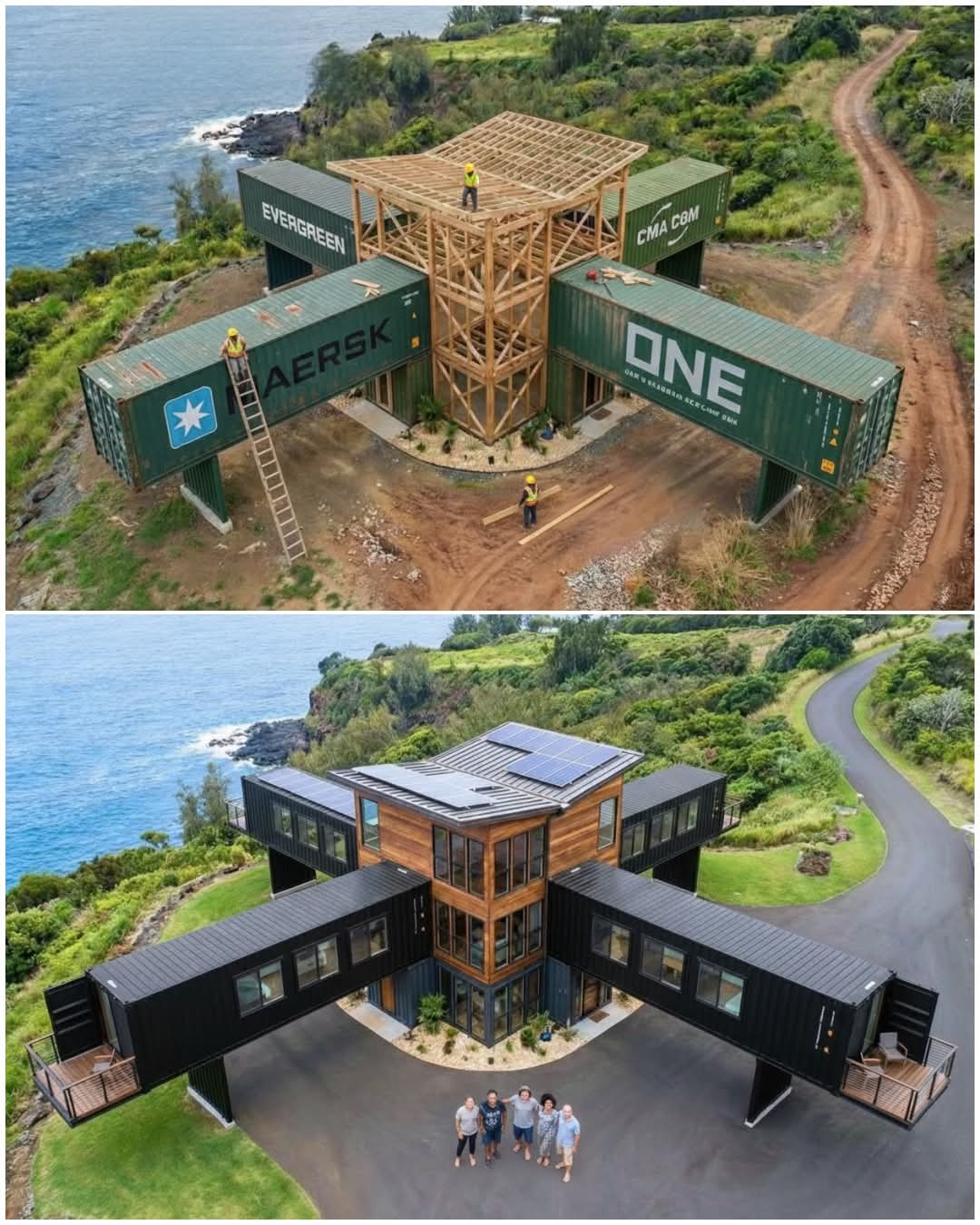
Building a striking, elevated shipping container home on a coastal cliffside, like one perched dramatically over the ocean, showcases innovative modular design that maximizes views and integrates with rugged terrain. This style often uses four or more 40-foot containers arranged in a cross or star-like formation, cantilevered outward on sturdy supports for expansive living areas and dramatic architecture.
The process starts with meticulous planning and permitting. Engage architects and structural engineers familiar with container builds to design the layout, ensure seismic and wind resistance (critical in coastal zones like Hawaii), and obtain approvals from local authorities, which may include environmental and coastal impact reviews.
Site preparation follows: clear access roads, stabilize the slope with retaining walls or grading, and install a robust elevated foundation. This typically involves deep concrete piers, steel pilings, or a raised platform to lift the structure high above ground for flood protection, views, and airflow beneath.
Containers arrive by truck or barge and are positioned using a large crane. Workers weld or bolt them securely to the foundation and each other, adding heavy steel beams and reinforcements to support cantilevered sections where containers extend beyond the base without direct ground support. Large openings are cut for panoramic windows, sliding doors, and connecting interiors, with frames welded in to preserve strength.
Insulation addresses humidity and temperature swings—spray foam or rigid panels line interiors. Plumbing, electrical, solar panels (often roof-mounted), and HVAC systems are installed, with utilities routed carefully. Exterior cladding, such as wood siding or durable metal, provides weatherproofing and aesthetics, while decks, railings, and pathways enhance outdoor living.
Interior finishes create comfortable spaces: flooring, drywall, kitchens, and bathrooms. The build usually takes 6–12 months, influenced by remote location logistics, weather, and custom engineering.
Approximate costs in 2025–2026 for a multi-container, elevated, cantilevered home (around 1,200–2,000 sq ft) range from $200,000 to $500,000 or more. This includes containers ($20,000–$60,000 total), advanced foundation and supports ($50,000–$150,000+ due to elevation and site challenges), modifications and reinforcements ($80,000–$200,000), utilities, finishes, and solar integration.
Hawaii's high material transport, labor, and permitting costs push prices toward the upper end, but modular efficiency and recycled materials offer savings over traditional coastal builds.
댓글